



Surrounding Areas and Places to Explore
Treviso
The Pearl of Veneto
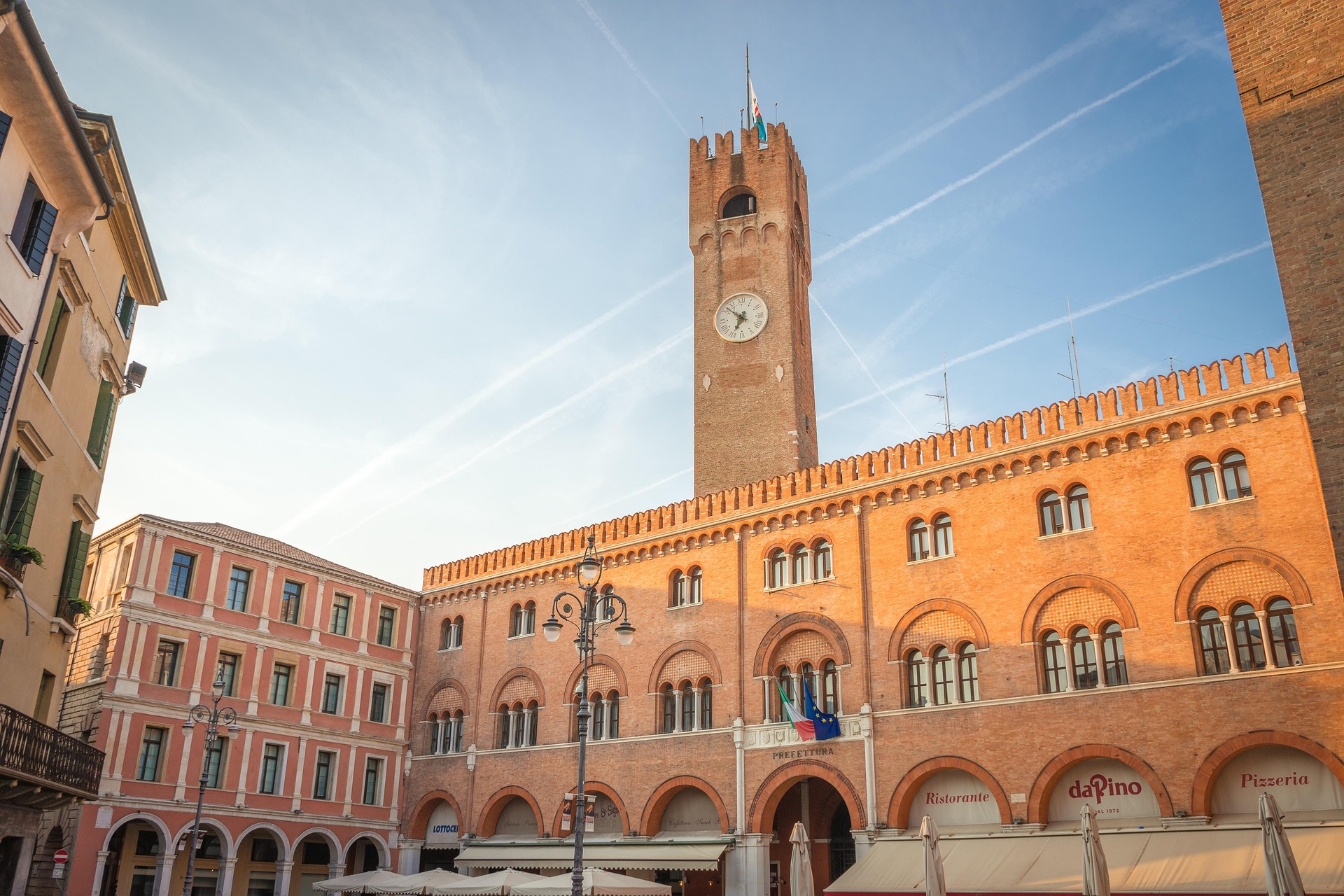
Treviso, an elegant city in the Veneto region and a true gem of Veneto, enchants visitors with its canals, historic center, and timeless atmosphere.
From here, you can set out to explore a region rich in cultural treasures: from Venetian villas to culinary traditions such as the Radicchio Trail, to museums, villages, and itineraries just waiting to be experienced.
What to See in Treviso
Piazza dei Signori
Ca' dei Carraresi
Loggia of the Knights
Treviso Cathedral
Scotti Palace
The City Walls and Gates of Treviso
.
The Towers of Treviso
.
The Venetian Villas
Villa Tivan (Via Terraglio n.15)
Located near Carpenedo, Villa Tivan was built in the 18th century by the Pezzana family, wealthy merchants who dealt in books and prints. Following recent restoration work, the large park in front of the villa is now a public garden, while the building itself houses offices.
Villa Algarotti Berchet (Via Terraglio n.92)
Converted from a 17th-century farmhouse, Villa Algarotti Berchet was built in 1740 by the brothers of the same name. Elegant and stately, with a single raised floor plus a service floor under the roof, it differs from the typical “villa-palace” style, resembling instead the large country houses.
Villa Mocenigo (Via Terraglio n.101)
Commissioned by the nobleman Senator Leonardo from Andrea Palladio, the villa was built in 1631 on land belonging to the Mocenigo family, on the banks of the Dese River, which was once navigable from Venice. The current villa was not built until the 19th century, based on a design that appears very different from the original.
Villa Franchetti (Via Terraglio n.203)
Built in the late 17th century as a country residence for the Albrizzi family, Venetian textile merchants, it was later embellished and expanded with the addition of two Palladian-style barchesse designed by Andrea Pagnossin of Treviso. The estate also features a vast English-style park covering approximately 11 hectares.
the museums
Canova Museum
The Antonio Canova Museum in Possagno houses the plaster cast collection, the archive, and the sculptor’s birthplace, which still contains some of his personal belongings. The complex also includes gardens and a park, connected by a picturesque portico.
Giorgione House Museum
The Casa Giorgione Museum in Castelfranco Veneto showcases the masterpieces of the famous Renaissance artist. The works on display and historical reconstructions allow visitors to immerse themselves in the atmosphere of the late 15th century. Provide your feedback on BizChat
Church of St. Catherine
The Museum of Santa Caterina in Treviso, housed in a former convent, preserves 14th-century frescoes by Tomaso di Modena and other important works of art. It brings together archaeological, pictorial, and modern collections, offering a rich journey through the city’s culture and history.
The Radicchio Trail
At the end of the year, the March of Treviso is enriched by one of its most iconic products: radicchio, a delicious and visually striking vegetable that represents a true local specialty. There are two main varieties, each with its own characteristics and traditions: red radicchio from Treviso and variegated radicchio from Castelfranco Veneto.
We are in the southern part of the province of Treviso, where the value of this product led to the creation of the Strada del Radicchio Rosso di Treviso I.G.P., the first vegetable in Italy to obtain Protected Geographical Indication certification in 1996.
This itinerary takes you on a journey of discovery through an authentic region, between the walled cities of Treviso and Castelfranco Veneto, in search of the traces of great artists and traditional flavors. A journey through culture, landscape, and food and wine that reveals the true spirit of the March of Treviso
Discover the itinerary
Treviso is the ideal starting point for exploring the Strada del Radicchio Rosso, a route that winds through picturesque landscapes and historic sites in the March of Treviso. As early as the 13th century, the so-called “joyful city” stood out for the vibrant colors that adorned the facades of its buildings, a symbol of the region and its traditions.
Continuing toward Fossalunga, you’ll come across the ancient Via Postumia, and then reach Barcon, home to the picturesque Barchessa di Villa Pola, with its charming wine cellar and historic granary. The route continues toward Fanzolo, home to the famous Villa Emo, designed by Andrea Palladio, a monument of extraordinary architectural value.
After Fanzolo, you’ll follow an ancient road that once connected Padua to Asolo, arriving at Riese Pio X and then continuing on toward the “prai” of Castello di Godego, an area of great scenic beauty, ideal for short hikes through the Venetian countryside.
Leaving this area behind, the road continues to wind through the meadows until it reaches the village of Bella Venezia, and then on to Castelfranco Veneto, which welcomes visitors with its clock tower and imposing crenellated walls, guardians of a long history and a fascinating heritage.
The beauties of the Treviso region
Located just a few kilometers from Venice, the province of Treviso is a region that harmoniously blends natural landscapes, art, history, and culinary traditions, captivating everyone who visits. It is an authentic place that leaves an indelible impression through its hospitality, culture, and flavors.
The landscapes of the Marca Trevigiana are constantly changing: from the plains to the Treviso Pre-Alps, from the Prosecco hills to the forests of Montello and Cansiglio, passing through charming towns and villages. A mosaic of diverse places that make this region—known as “Bella et Amorosa”—well worth exploring.
Places You Shouldn't Miss
Treviso
Castelfranco Veneto
Conegliano
Oderzo
Valdobbiadene
Asolo
Vittorio Veneto
Montebelluna
From Venice to Treviso along the Sile River
Along this route, you’ll be able to trace the history of Venice’s origins. You’ll arrive in the northern lagoon and explore the waterways that once carried the logs—used to build Venetian palaces—from the docks of Treviso (now part of the Marca region).
Discover the itinerary
Starting from the Casier and Silea area, you can cross the picturesque valley along the Sile River and reach Treviso in just a few minutes. Along the way, the landscape is full of charm, with lush vegetation, calm waters, and swans and waterfowl that accompany you on your journey in a bucolic atmosphere.
Continuing along the river, you’ll come to the small town of Cendon, while elegant historic villas line the banks, including Villa Mantovani Orsetti and Villa Barbaro, which are among the most charming in the area. The route continues toward Quarto d’Altino and leads to Torcello, where a picturesque complex of historic buildings evokes the atmosphere of an ancient lagoon village, including the famous Devil’s Bridge, linked to a curious local legend.
A short distance away are the islands of Burano, with its distinctive colorful houses and tradition of handcrafted lace, and Mazzorbo, which is more intimate and quiet. Continuing on, you’ll reach Murano, famous worldwide for the art of glassblowing.
The journey ends in Venice, with an arrival in the splendid Piazza San Marco, dominated by the majestic bell tower and the historic Doge’s Palace, timeless symbols of the lagoon city.
Bike Routes
Located near the Sile River Park, the Best Western Titian Inn Hotel Treviso is the ideal starting point for over 40 km of bike and walking trails surrounded by nature. Amid picturesque landscapes, historic wine barrels, and points of interest, you can follow the Via Claudia Augusta to the archaeological site of Altino and—why not?—even ride your bike all the way to Venice.
Treviso is also part of the Ciclovia dell’Amicizia, an international cycling route that connects Munich to Venice.